Clippy: Modular Desk Extension
A portable, clamp-on desk attachment designed to enhance student productivity in lecture halls
Summary
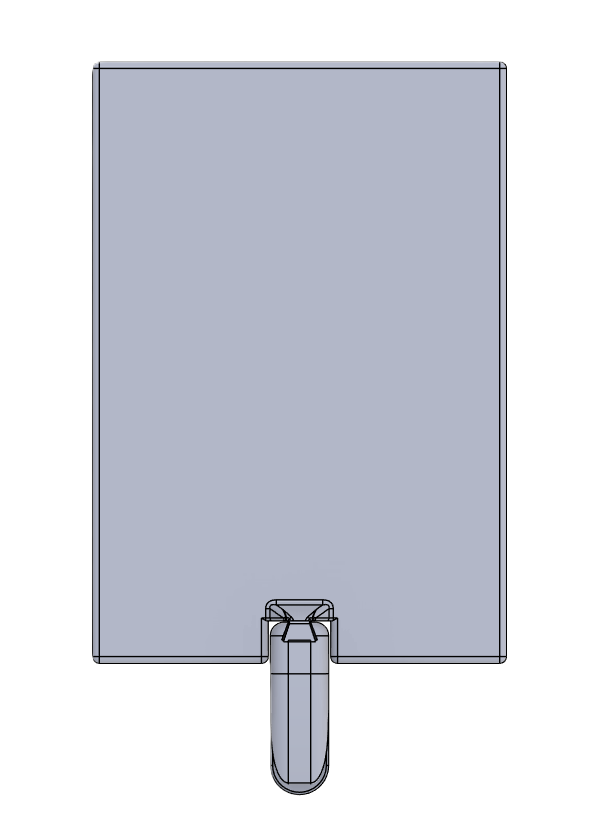
Clippy is a modular desk extension system designed to address the common problem of inadequate workspace in university lecture halls. Through extensive user research with Cornell University students, our team identified key pain points: limited desk space, difficulties for left-handed students, and the need for portable, affordable solutions.
Our design process evolved through three major iterations, incorporating user feedback, mechanical analysis, and manufacturing considerations at each stage. We developed both modular and non-modular versions, each optimized for different use cases and production scenarios. The final design features a screw-clamp mechanism for easy attachment, an extended writing surface providing approximately 8.5" x 11" of additional space, and the option for interchangeable attachments.
We conducted comprehensive manufacturing analysis using injection molding simulations, obtained production quotes from manufacturers and developed detailed cost breakdowns. Our analysis showed that the non-modular version could be produced for approximately $10.53 per unit and sold at $14.99, while the modular version would cost $14.20 per unit with a retail price of $19.99. Based on a target market of 2.7 million college students and conservative sales projections, we calculated a 5-year NPV of $1.4 million for the modular version and $628,000 for the non-modular version.
User Needs & Problem Discovery
Need-Finding Methodology
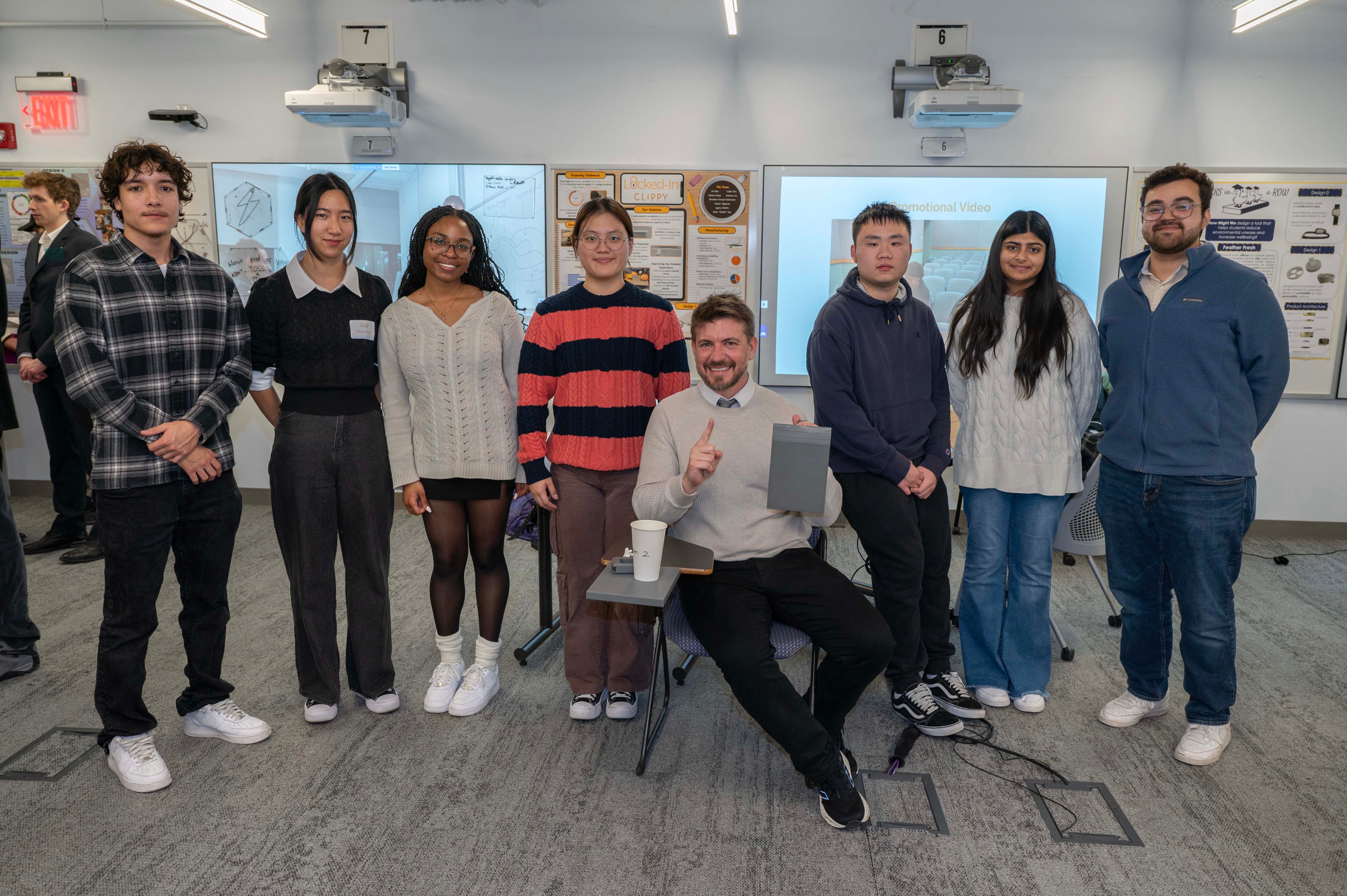
Our user research began with systematic observations of students at Cornell University across multiple lecture halls and classroom settings. We conducted field studies in large lecture halls, focusing on how students utilized existing desk space and noting common frustrations and workarounds. This observational phase was complemented by structured interviews with students from diverse academic backgrounds and studying habits.
Through our fieldwork, we identified five major categories of student challenges: convenience (28%), material and design preferences (32%), space constraints (14.6%), availability of solutions (10.6%), and general interest level (13.3%). These categories informed our design priorities and helped us understand the broader context of student workspace needs.
Key Problems Identified
Insufficient Desk Space
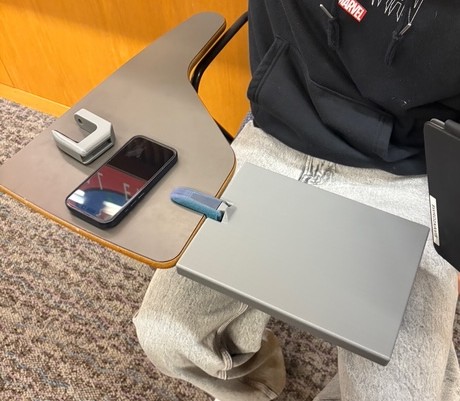
Standard lecture hall desks (typically 12" x 18") provide inadequate room for notebooks, textbooks, laptops, and other materials. Students frequently run out of space and resort to placing items on their laps or the floor.
Left-Handed Student Disadvantage
Most lecture hall desks are designed for right-handed students, with the desk surface extending to the right. Left-handed students often struggle with awkward writing positions and limited designated left-handed seating.
Portability Concerns
Students expressed the need for a lightweight solution that wouldn't add significant weight to their already heavy backpacks. Any desk extension would need to be compact enough to carry between classes.
Price Sensitivity
As college students, our target users are budget-conscious. Through conjoint analysis, we found that the optimal price point was between $10-25, with preference strongly declining above $25.
Conjoint Analysis
Using Conjoint Analysis, we prioritized different aspects of the solution. The analysis revealed that convenience ranked highest in importance, followed by material/design considerations and space optimization. This quantitative approach to user needs helped us make informed trade-offs during the design phase, particularly when balancing features like modularity against simplicity and cost.
Product Development
Initial Cardboard Prototype
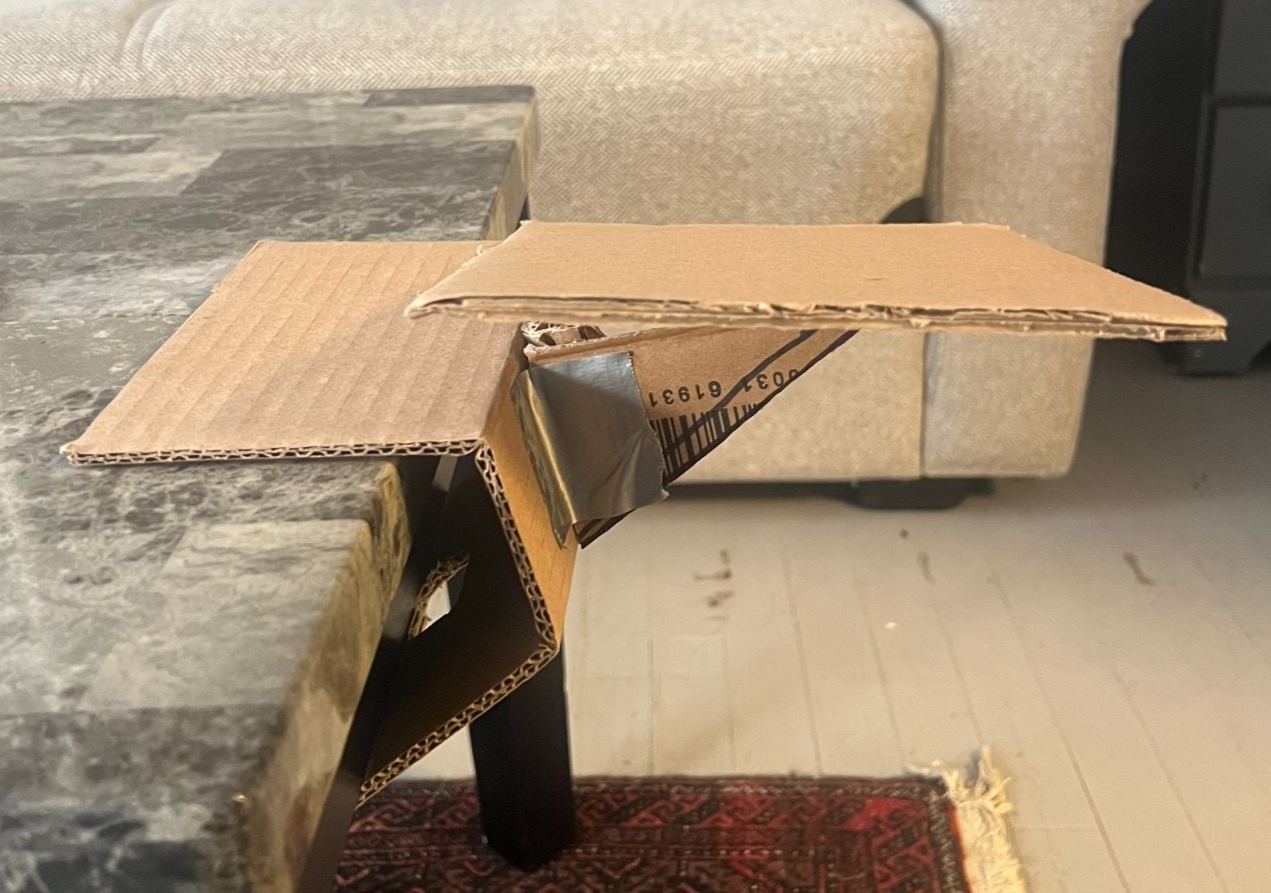
Our first prototype was constructed from cardboard to quickly validate the core concept with users. This preliminary design featured a basic C-clamp mechanism and a simple flat extension surface. While the cardboard material proved too flimsy for reliable structural testing, it successfully communicated the product's intent and allowed us to gather initial user feedback on sizing, attachment methods, and overall usability.
User testing with Design 0 revealed critical insights: students wanted a quicker attachment mechanism (fewer screw rotations), better integration with the existing desk surface, and concerns about the product taking up space on the lecture desk itself. The feedback also highlighted interest in modularity.
Final Design
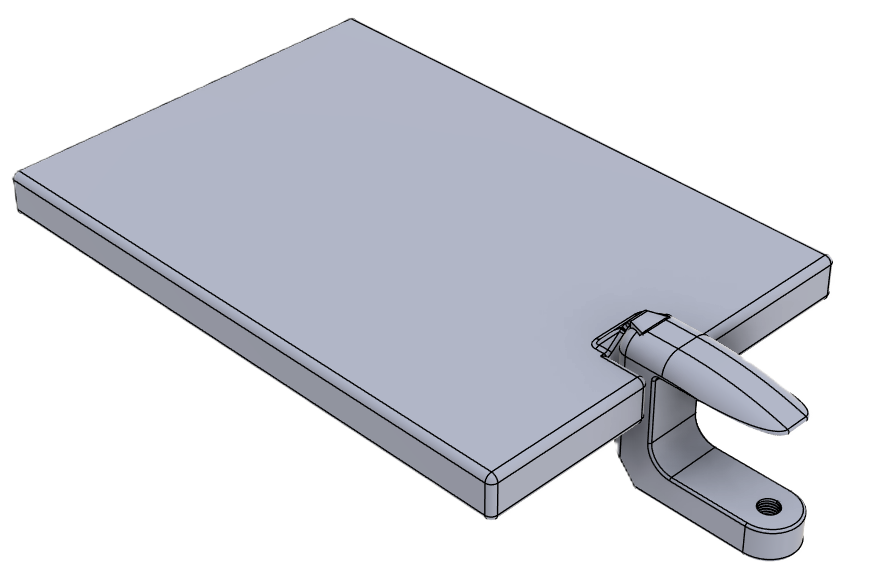
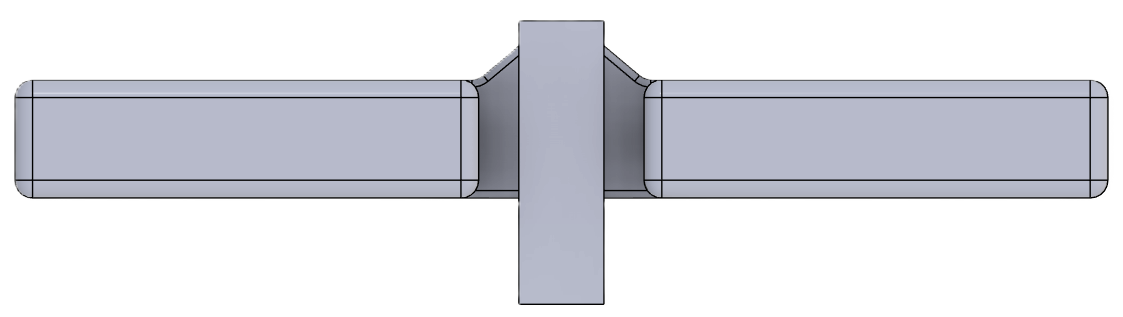
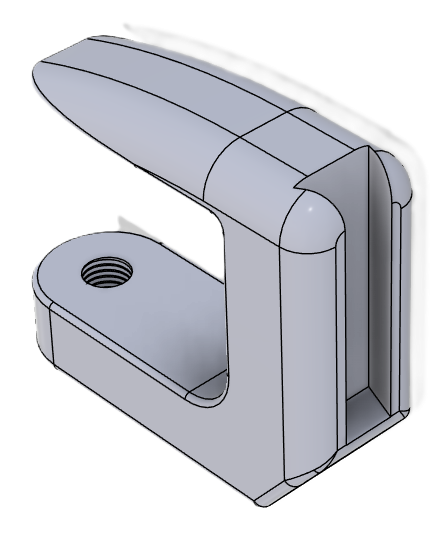
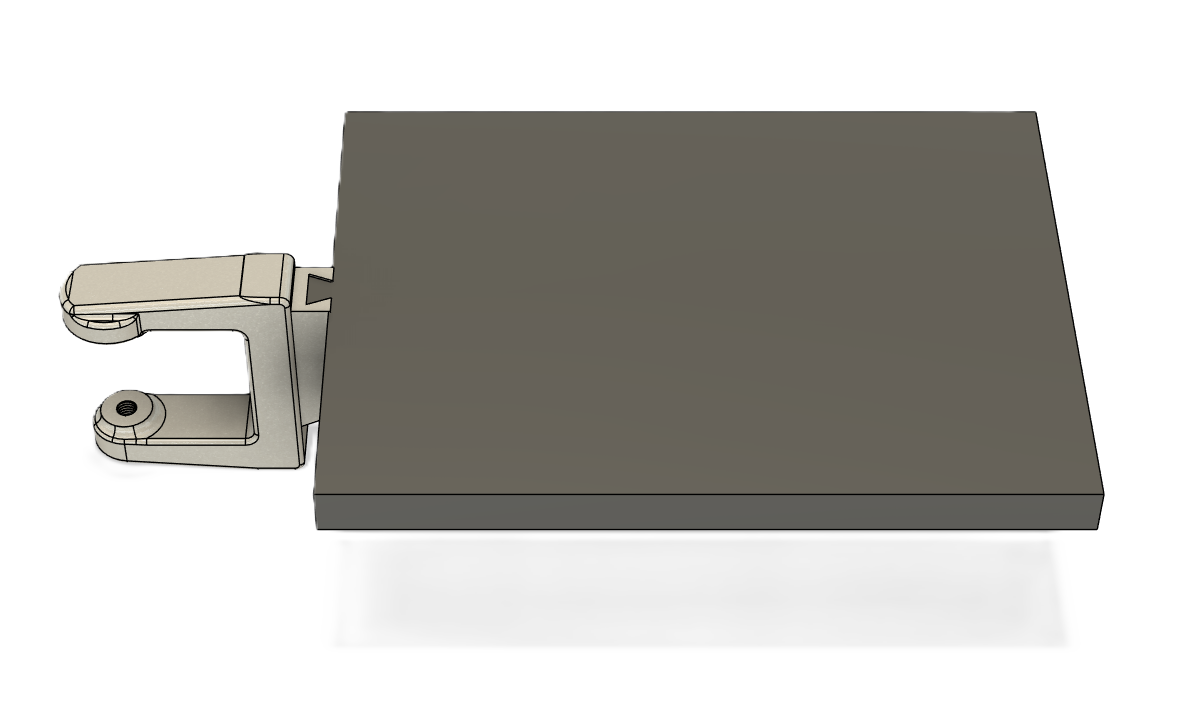
The final design incorporated lessons from mechanical analysis and user testing. We introduced a ramped transition from the lecture desk to the extension surface, providing a smoother writing experience and reducing the perception of a disconnected add-on. The underside featured a strategic grid pattern of cutouts that reduced weight by approximately 30% while maintaining structural integrity.
We also developed both modular and non-modular final versions to address different market segments and production scenarios. The modular version retained the ability to swap attachments through a refined dovetail joint with radiused corners to reduce stress concentration. The non-modular version integrated the clamp and desk into a single piece, simplifying manufacturing and reducing cost.
Material selection focused on ABS plastic for its favorable strength-to-weight ratio, flexibility before failure, and compatibility with injection molding. Unlike acrylic, which fractures suddenly, ABS provides visible deformation as a warning before catastrophic failure. Physical prototypes were 3D-printed in various orientations to test layer adhesion strength.
Mechanical Analysis & Testing
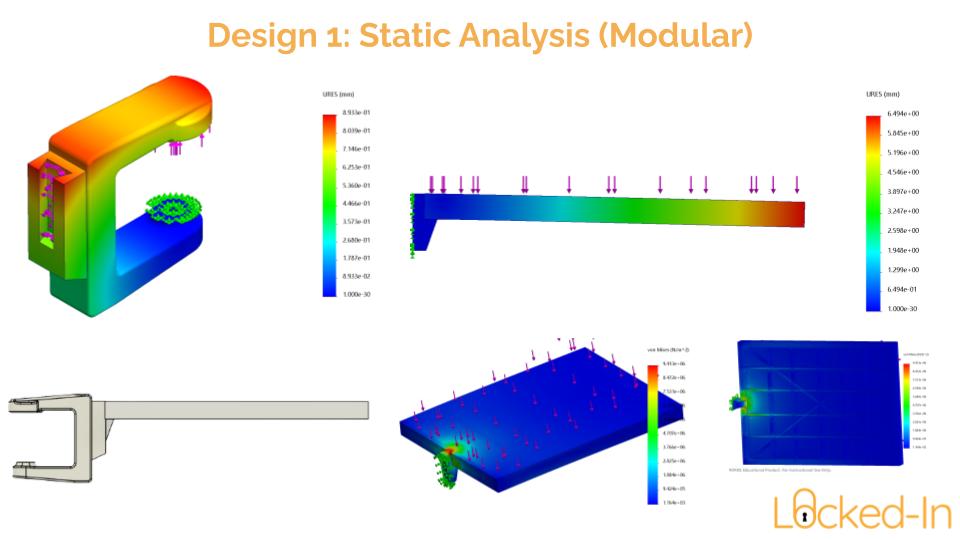
We conducted extensive finite element analysis (FEA) using ANSYS to validate our designs under realistic loading conditions. Our simulations applied forces up to 320N at the far end of the desk extension to represent extreme use cases where students might lean heavily on the surface.
The FEA results for the modular design showed maximum von Mises stress of approximately 36.5 MPa under load, with most of the structure experiencing stresses below 30 MPa. The highest stress concentrations occurred at the connection point between the clamp and the desk extension, as expected due to the moment arm created by the cantilevered design. The non-modular version showed similar stress patterns, with a maximum stress of 55 MPa at the attachment point.
We also performed cyclic loading analysis to estimate product lifespan. Using S-N curve data for ABS plastic at room temperature, we predicted the clamp region would begin to fail after approximately 4,300 cycles under worst-case loading conditions. This analysis confirmed that the clamp-to-desk connection point was the critical failure location and informed our design refinements to reinforce this area.
Manufacturing Validation
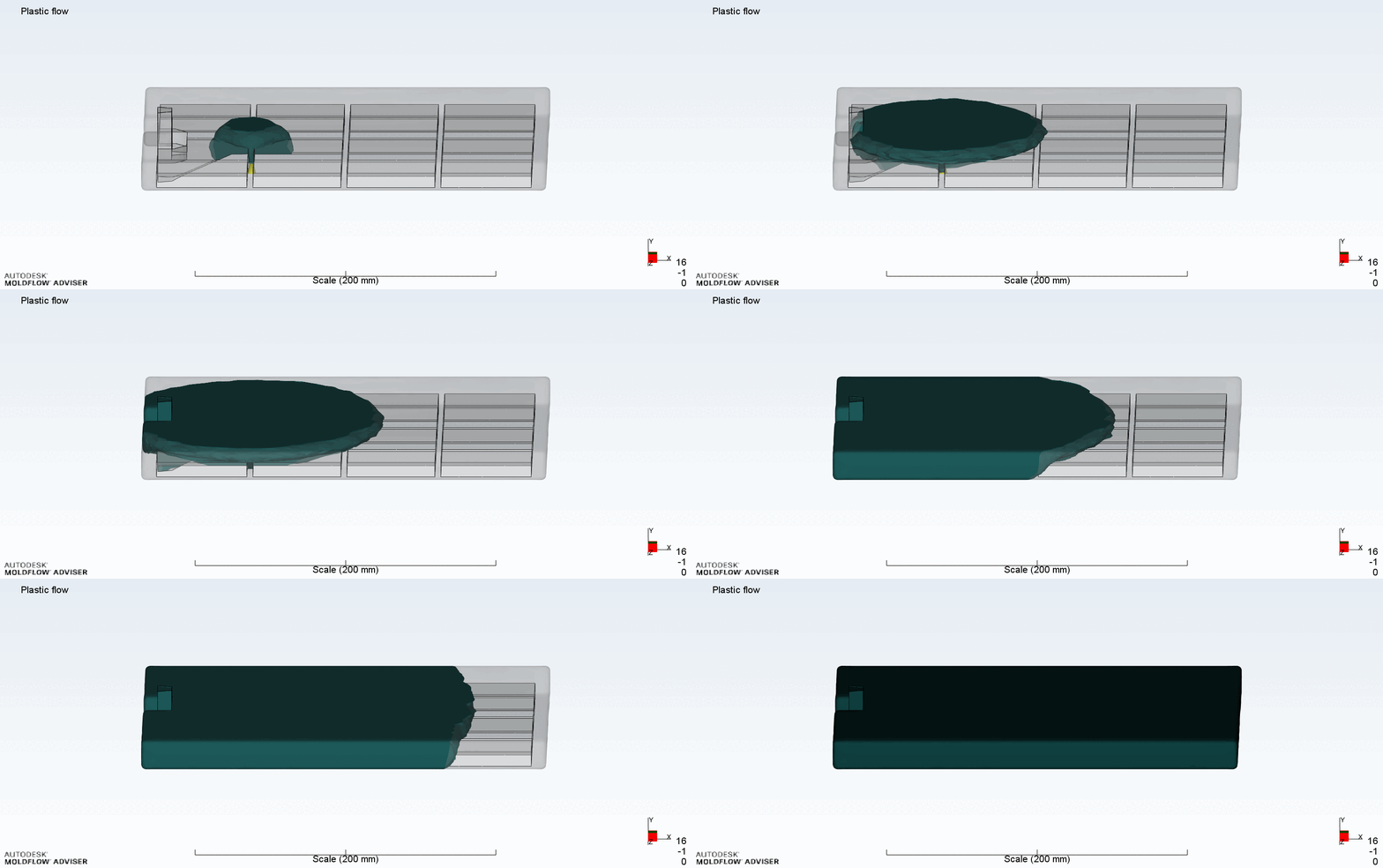
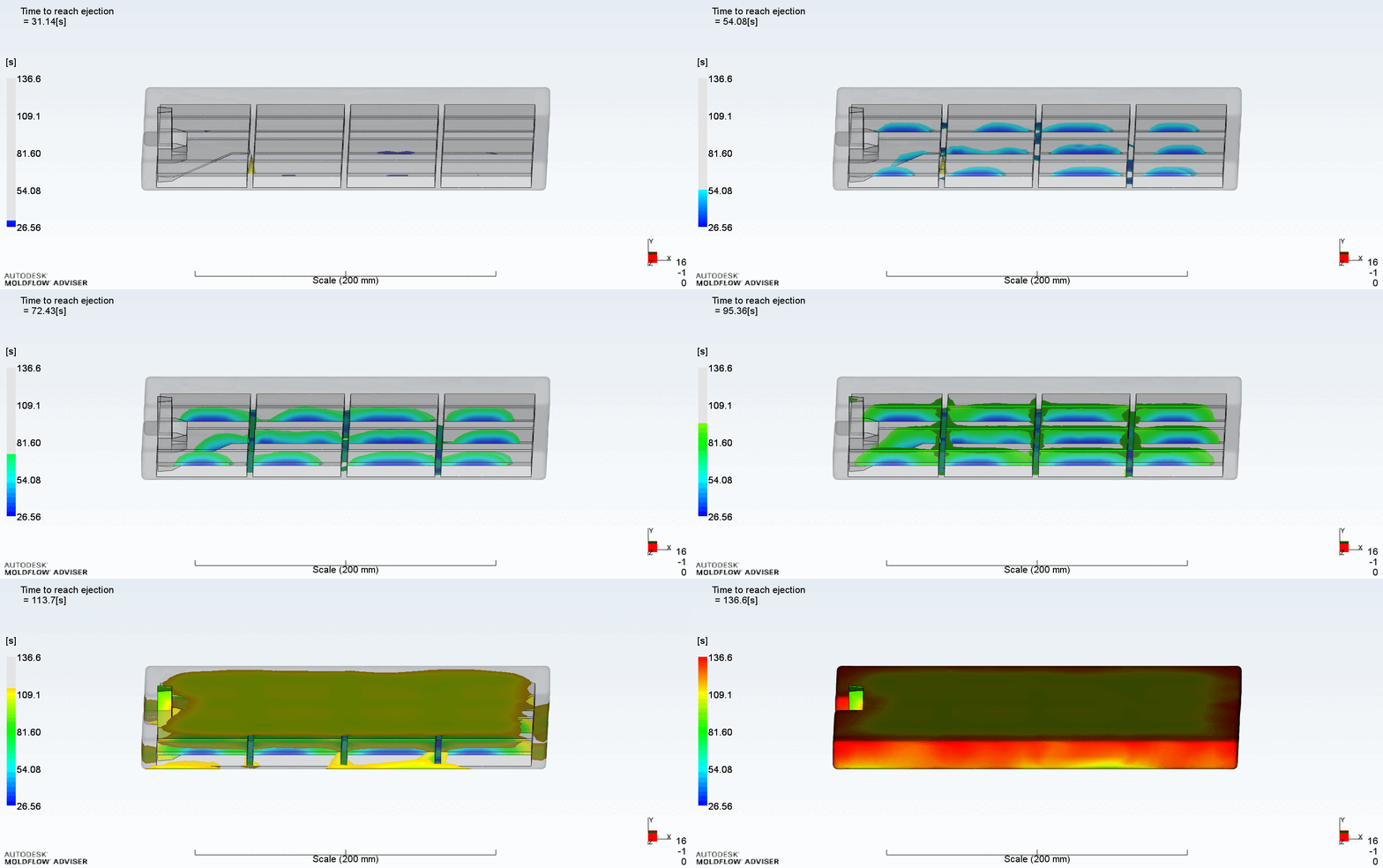
We used Autodesk Moldflow to simulate the injection molding process for both designs. The modular version required separate molds for the clamp and desk extension, with total cycle times of 187 seconds. The non-modular version had a single mold with a 222-second cycle time. Moldflow analysis revealed potential issues with cooling-induced warpage, particularly at the far edges of the desk extension. The simulation showed that the non-modular design would experience more deflection (0.048m maximum) but also predicted good-quality fill with minimal defects.
Business Analysis
Manufacturing Cost Breakdown
Based on economic batch size analysis, part architecture, and surface finish requirements, we selected plastic injection molding as our primary manufacturing method. For our target market of college students across universities nationwide, we need the capability to scale from an initial batch of 10,000 units to potentially 500,000+ units. Injection molding provides the necessary scalability, consistent quality, and cost-efficiency at volume that would be impossible with 3D printing or other fabrication methods.
Modular Clippy Cost Breakdown
Material Cost: $1.78
Mold Cost: $4.34
Molding Cost: $2.78
Post-Processing: $5.30
Total Per Unit: $14.20
Tooling (One-time): $16,281
Non-Modular Clippy Cost Breakdown
Material Cost: $0.55
Mold Cost: $2.26
Molding Cost: $2.81
Post-Processing: $4.91
Total Per Unit: $10.53
Tooling (One-time): $12,459
Pricing Strategy
Our pricing policy is based on value-based pricing informed by conjoint analysis and competitive benchmarking. The analysis showed that students find maximum value in the $10-15 price range, with willingness to pay declining sharply above $25. We positioned the non-modular Clippy at $14.99 and the modular version at $19.99, both within the acceptable range while providing healthy profit margins.
Competitor analysis revealed that the VIVO Clamp-on Desk Extension sells for $45.99 but targets home office users rather than students. A previous Kickstarter project, Desk Buddy, priced their product at $25 but failed to deliver, potentially due to underestimating production costs. By positioning ourselves as a cost leader at $14.99-$19.99, we can capture significant market share while maintaining profitability.
Market Size & Sales Projections
We estimated the total addressable market using a bottom-up approach. With approximately 4,000 universities and colleges in the US, averaging 15 large lecture halls per institution with 100 seats each, we calculated roughly 3 million potential desk spaces that could benefit from Clippy. The National Center for Education Statistics reports 13.5 million students in 4-year institutions. Assuming 20% of students would find value in a desk extension product, this yields a target market of 2.7 million potential customers.
Our conservative sales projections anticipate capturing 0.37% market share (10,000 units) in year one, growing to 3.7% (100,000 units) by year three, and reaching 18.5% (500,000 units) by year five. These projections account for the need to build brand awareness, establish distribution channels, and potentially partner with universities for bulk purchases.
Financial Projections
Using a weighted average cost of capital (WACC) of 10.77% calculated from an assumed equity-to-debt ratio of 80:20, we projected net present value over five years. The modular Clippy shows an NPV of $1,411,624 based on the pricing and cost structure outlined above. The non-modular version, while having lower per-unit profit margins ($4.46 vs $5.79), shows an NPV of $627,952 due to the same volume projections.
Fixed costs including tooling, setup, and facility expenses are estimated at $400,000 averaged over five years. These calculations assume initial capital investment of $2 million covering equipment, inventory, marketing, and operational costs for the first 18 months.
Funding Strategy
To finance initial production and scale operations, we evaluated several funding approaches. Crowdfunding through platforms like Kickstarter offers validation and community building but may not raise sufficient capital given the high fixed costs of injection molding tooling. Bank loans for manufacturing equipment could provide $2 million at approximately 8.75% APR with adequate collateral and business plan documentation.
Strategic partnerships with universities represent an attractive alternative, where institutions purchase Clippy in bulk for installation in lecture halls. This B2B approach could provide guaranteed initial sales and reduce marketing costs, though it shifts our model from individual consumer sales to institutional buyers.
Project Files & Documentation
Access the complete project documentation including the final design report, review presentations, and design slides.